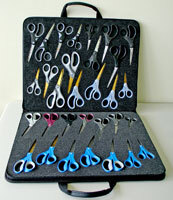
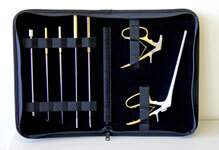
Custom Soft Sewn Cases
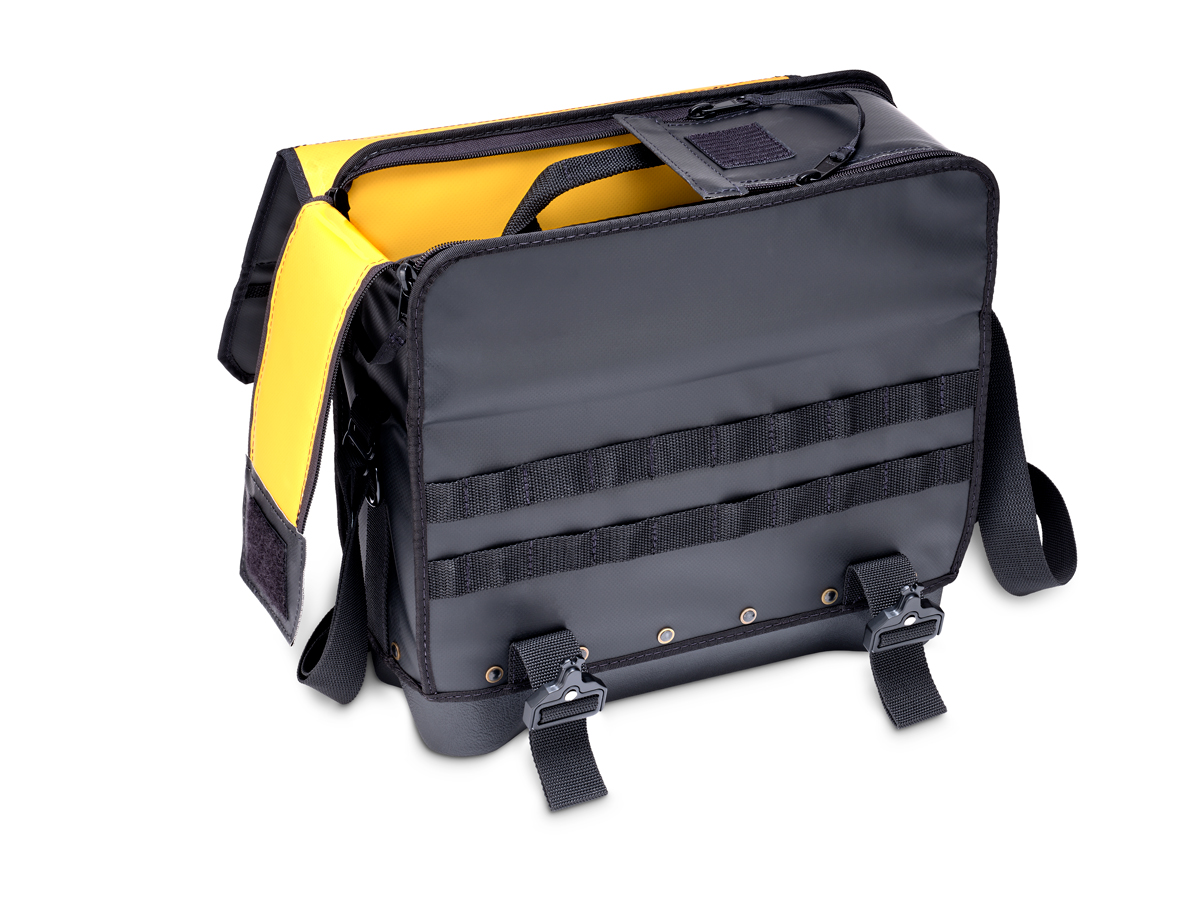
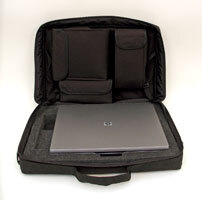
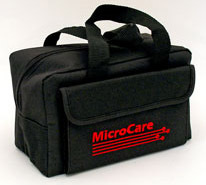
Custom soft-sewn cases are fabric-constructed carrying and protective cases manufactured to the specific dimensions and functional requirements of the equipment or contents they carry. Unlike hard protective cases, soft sewn cases are built from flexible materials — nylon, polyester, and ballistic fabrics — that provide lightweight protection, ergonomic carrying comfort, and organized internal access without the bulk or weight of a rigid shell.
The right application for a custom soft case is one where the primary risks are abrasion and disorganization, not severe impact or compression. When a field technician carries a meter kit every day, when a sales representative opens a demo case at every client meeting, or when a medical device must be transported in a clean, organized format without the weight of a hard case, a custom soft-sewn case delivers more value per pound than any rigid alternative.
Platt Cases manufactures custom soft cases as scalable, repeatable programs. Design files are archived, patterns are versioned, and production runs can be reproduced to the same specification from 10 units to 100 and beyond.
When Soft Sewn Cases Are the Right Choice
Soft-sewn cases are the correct solution when weight, portability, and access speed matter more than rigid impact protection. The decision is rarely case vs. no case — it's usually soft vs. hard, and the use scenario determines which is right.
| Consideration | Soft Sewn Case | Hard Case |
|---|---|---|
| Weight and portability | Significantly lighter; flexible for tight storage | Heavier; fixed dimensions regardless of contents |
| Daily carry comfort | Ergonomic straps, padded handles, contoured shapes | Handle or wheels; less adaptable to body carriage |
| Access speed | Multiple zip compartments, open-top, roll-up designs | Single lid opening; may require latching and unlatching |
| Impact protection | Moderate — foam-padded inserts provide cushioning | High — rigid shell absorbs and distributes impact |
| Branding | Embroidery, printed labels, and color selection | Screen print, decals, engraving |
Soft-sewn cases are the right call when the equipment is handled every day, when the person carrying it does so on foot or in the field, when access to multiple compartments matters operationally, or when the program budget favors a lighter case that still delivers organized, professional protection.
Benefits of Custom Soft Sewn Cases
The value of a custom soft-sewn case over an off-the-shelf bag or a generic soft case comes from fit, function, and program repeatability. Generic cases are designed for the broadest possible use — custom soft cases are designed for one specific application, one specific workflow, and one specific user environment.
- Exact-fit internal organization: pockets and compartments sized to the specific equipment and accessory list — no loose items, no wasted space, no repacking guesswork
- Weight advantage: nylon and ballistic polyester programs can weigh significantly less than a comparable hard case, protecting the same equipment
- Ergonomic carrying: padded shoulder straps, backpack configurations, and form-fit designs distribute weight across the carrier's body — reducing fatigue for technicians and field personnel who carry the case all day
- Branding real estate: the exterior fabric surface of a custom soft case is a continuous branding surface — color-matched, embroidered, or labeled to the program specification
Custom Soft Sewn Case Manufacturing Capabilities
Platt Cases manufactures custom soft-sewn cases as complete production programs — from pattern development and material sourcing through first-article approval and production run delivery. Supported volumes range from pilot quantities to 100+ units per run, with design files and approved patterns archived for reorders that match the original specification without requiring a new prototype cycle.
Custom soft-sewn cases can be manufactured as standalone products or integrated with foam inserts, rigid panels, and protective accessories as part of a broader custom case program. A field kit that requires both a padded soft case for daily carry and a rigid hard case for shipping can be designed as a coordinated program at Platt Cases.
Case Styles and Form Factors
The form factor is the first design decision in any custom soft-sewn case program. It determines the carrying method, access pattern, and internal organization approach before fabric or hardware is specified.
| Form Factor | Best Application |
|---|---|
| Zippered soft case | Daily carry for instruments, test equipment, and organized kits requiring full interior access at open |
| Pouches and sleeves | Single-item or grouped-item carry with fast insertion and removal — meters, tablets, handheld devices |
| Tool bags and roll-up cases | Technician tool kits requiring individual pocket access without opening and repacking the entire case |
| Shoulder bags | Field service and sales programs where over-shoulder carry is preferred over backpack or hand carry |
| Backpack configurations | Heavy-weight or multi-item kits for personnel who carry the case for extended periods across distances |
| Form-fit / contoured designs | Equipment with irregular shapes, where a standard rectangular case creates excessive void volume and movement |
| Open-top and tray cases | Bench or cart use where the case is placed and contents accessed repeatedly without full closing |
Materials and Fabrics
Material selection determines durability, weight, water resistance, and the appearance of the finished case. The correct fabric for a field service tool bag in a dirty industrial environment is different from the correct fabric for a medical device transport case or a presentation-grade sales kit.
| Material | Properties and Best Application |
|---|---|
| 1000D nylon | High abrasion resistance in the soft case fabric range; preferred for industrial, military, and heavy field service programs where the case takes daily physical abuse |
| 500D / 600D polyester | Mid-weight, good abrasion resistance, cost-effective for programs where a full spec is not required; common in field service and demo kit programs |
| Ballistic nylon (1680D) | Dense weave originally developed for military use; excellent cut and abrasion resistance for high-wear programs |
| Water-resistant coatings | PU or TPU coating applied to base fabrics; appropriate for outdoor, field, and any program where moisture exposure is a handling risk |
| Interior liners | Nylon or polyester liner fabrics protect equipment surfaces from abrasion on the interior walls; color options support organization and presentation programs |
Padding, Liners, and Internal Protection
Soft-sewn cases protect equipment through a combination of fabric strength, internal padding, and organized compartmentalization. The padding system is engineered to the specific equipment's fragility profile — a padded soft case for a ruggedized field meter has a different specification than one protecting a precision optical instrument or a polished medical device.
- Closed-cell PE foam padding: firm, moisture-resistant panels laminated or sewn into case walls and base for consistent cushioning across the case footprint
- Open-cell PU foam: softer cushioning for lighter equipment; commonly used in lid panels and dividers where dense foam would add unnecessary weight
- Sewn dividers and hook-and-loop-adjustable compartments: allow internal organization to be configured by the user or standardized for a specific kit layout
- Sewn pockets: exterior and interior pocket configurations for cables, accessories, documentation, and consumables that must travel with the primary equipment
- Rigid panel inserts: thin PE or ABS panels sewn into case walls provide shape retention and lateral impact resistance without the weight of a full hard shell
The Custom Soft Sewn Case Manufacturing Process
Platt Cases produces custom-sewn soft cases through a structured process with buyer approval points at each stage. Pattern development, material selection, and first-article approval are completed before any production quantities are cut and sewn.
Design and Pattern Development
Pattern development begins with the equipment list and use scenario. Platt Cases translates the equipment dimensions, accessory requirements, carrying method, and access pattern into a sewn pattern that defines pocket placement, handle attachment points, zipper runs, reinforcement locations, and overall case dimensions.
- Equipment fit tolerance: soft case patterns are sized with material-specific tolerances — fabric stretches and compresses differently than foam or rigid shell, and the fit must account for these properties at the loaded and unloaded state
- Usability considerations: zipper pull placement for one-handed access, handle positioning for balanced carry, strap attachment angle for shoulder comfort, and pocket sequencing for workflow-logical organization are all defined at the pattern stage
- Material specifications: fabric weight, color, coating, lining, hardware finish, and thread type are confirmed before the first sample is cut
Prototyping and Sample Approval
A first article is built to the approved pattern and specifications, then shipped to the buyer for physical evaluation. Platt Cases requests that buyers load the sample with the actual equipment and accessories and assess fit, access, carry comfort, and overall quality before approving the design for production.
- Fit validation: does every item go in and come out cleanly? Are pocket sizes correct for the actual accessories, including cables, chargers, and consumables?
- Access testing: are zipper pulls in the correct location for the actual use scenario?
- Durability indicators: seam placement, reinforcement at stress points, and zipper gauge are reviewed against the production environment before sign-off
- Revision cycles: pattern adjustments based on sample feedback are incorporated before production cutting begins — no production quantities are sewn until the buyer provides written approval of the sample
Production and Quality Control
Approved patterns are used to cut all production fabric panels to consistent dimensions using die cutting or computer-controlled cutting equipment. Cut panels are assembled and sewn on industrial sewing machines to the approved stitching specification, with reinforcement stitching at handles, zipper ends, and carrying attachment points.
- Stitching standards: stitch type, stitch density, and thread tension are specified for each seam category — interior seams, exterior seams, and high-stress reinforcement zones each have different requirements
- Hardware inspection: zippers, buckles, D-rings, and snaps are checked for smooth operation and secure attachment before final assembly
- Final inspection: completed cases are checked for dimensional accuracy, stitching integrity, pocket and zipper function, hardware security, and appearance against the approved sample before packing
Customization Options for Soft Sewn Cases
Custom soft-sewn cases offer a broad range of functional and aesthetic customization that hard cases cannot easily match. The fabric exterior and sewn construction allow hardware, carrying systems, branding, and identification to be integrated into the case design from the first pattern — not added on after manufacture.
Closures, Handles, and Carrying Options
| Feature | Options and Considerations |
|---|---|
| Zippers | YKK and equivalent heavy-duty zippers in standard and oversized pulls; double-pull for simultaneous two-hand opening; lockable zipper heads for programs requiring tamper indication |
| Buckles and clips | Side-release buckles, cam buckles, and latch-style clips in plastic or aluminum — selected by load rating and program environment |
| Hook-and-loop | For accessory panels, cover flaps, and adjustable dividers; specify loop side on the interior for tool holster compatibility |
| Grab handles | Sewn webbing handles with foam or rubber grip inserts at top and side positions; handle placement is pattern-specified for balanced carry at the loaded weight |
| Shoulder straps | Removable padded shoulder straps with adjustable length and non-slip shoulder pads; attachment via D-rings or swivel clips per carry method preference |
| Backpack straps | Integrated or stowable backpack strap systems for high-weight or two-hand programs; strap thickness and padding matched to expected load weight |
Branding and Identification
The exterior of a custom soft-sewn case is a continuous branding surface. Color selection, logo placement, and identification labeling are specified at the pattern stage and are consistent across every unit in the production run.
- Embroidery: logo and text embroidery is the most durable branding method for soft cases — colorfast, abrasion-resistant, and visible across the life of the case
- Woven labels and patches: sewn-in labels for program identification, regulatory markings, and care instructions; heat-applied or sewn patches for logo placement on high-wear exterior panels
- Screen printing transfers: for programs where embroidery detail resolution is insufficient or where a flat-surface graphic is preferred
- Asset and serial tags: sewn-in or riveted asset tag pockets for programs with tool accountability, chain-of-custody, or asset tracking requirements
- Color matching: exterior fabric and webbing colors selected from manufacturer color runs; Pantone-adjacent matching is available for programs with specific brand color requirements in higher volumes
Industry and Application Solutions
Custom soft-sewn cases serve different functional requirements across industries. The correct fabric weight, padding system, carrying configuration, and interior organization depend on what the case carries, who carries it, and what environment it operates in.
Medical and Life Sciences
Medical device and life sciences programs require soft cases that balance protection with cleanliness, organization with access speed, and professional presentation with the practical realities of clinical environments. Typically constructed from coated fabrics with wipeable interior liners.
- Organized accessory pockets sized to specific device accessories — power supplies, cables, sensors, documentation
- Lower-weight transport for devices carried between patient rooms, clinical areas, or off-site locations
Electronics and Test Equipment
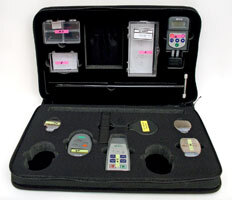
Electronics and test equipment programs prioritize scratch protection, cable organization, and fast access for technicians who use the same case multiple times per day.
- Non-abrasive interior liners protect calibrated instrument faces, display surfaces, and connector ports from contact damage
- Cable management pockets prevent tangles and allow cables to be stored without coiling stress on connectors
- Fast-access exterior pockets for probes, accessories, and documentation needed before the main case is opened
Industrial, Field Service, and Tool Kits
Field service and industrial programs demand the most from a custom soft-sewn case — opened and closed multiple times per day in dirty, wet, and physically demanding environments.
- 1000D or ballistic nylon exterior for maximum abrasion and cut resistance in industrial environments
- Reinforced base panels and padded drop zones for cases set down on rough surfaces or handled roughly in transit
- Tool loops, holsters, and fixed pockets sized to the exact tool inventory — eliminating rattle, preventing damage, and enabling fast access
Sales, Demo, and Training Kits
Sales and demo program cases are opened in front of customers — the interior must look organized and professional at every opening, not just the first one.
- XLPE foam or rigid panel inserts hold demo components at consistent angles — the case opens to the same organized presentation every time
- Premium fabric options and high-resolution embroidery for programs where the case exterior contributes to brand perception
- Dedicated documentation pockets, business card slots, and literature holders for kits that include printed materials
Production Volumes, Lead Times, and Cost Considerations
Custom soft-sewn case programs at Platt Cases are designed for buyers who need repeatable production — not one-off custom builds.
| Program Stage | Typical Parameters |
|---|---|
| First article process | Pattern development, drawings, first article, and buyer approval: 3–5 weeks from confirmed specifications |
| Production run | 100–500+ units: 4–8 weeks from approved pattern and confirmed materials, depending on fabric lead time, branding, and program complexity |
| Reorders | Archived patterns and specifications: reorder lead time is reduced significantly — no new pattern development cycle required |
| Cost drivers | Fabric weight and type, interior complexity (number of pockets and compartments), hardware selection, branding (embroidery adds setup cost amortized over volume), and quantity |
| Volume economics | Per-unit cost decreases meaningfully from 50 to 200 units as setup costs are amortized; programs over 500 units benefit from bulk material pricing |
Design Considerations for Scalable Soft Sewn Programs
A custom soft-sewn case that works well as a prototype must produce identical results across 100, 200, or 500 units. Designing for repeatability requires addressing the variables that create unit-to-unit inconsistency in sewn production.
- Reinforcement at wear zones: stress points at handle roots, zipper ends, strap attachment D-rings, and base corners receive reinforced stitching at the pattern stage — not as a field fix after failure reports
- Hardware consistency: zipper gauge, buckle type, and D-ring size are specified by part number — generic hardware substitution introduces dimensional and functional variation between runs
- Version control: pattern files are versioned and archived at Platt Cases; when the equipment changes and the case must be revised, the revision is applied to the archived pattern with a new version designation — not re-patterned from scratch
- Pre-production material confirmation: fabric lots vary between manufacturing runs; Platt Cases confirms fabric weight, color, and coating against the approved specification before cutting production quantities
Why Platt Cases for Custom Soft Sewn Manufacturing
Platt Cases manufactures both soft-sewn cases and hard protective cases — which means custom soft case programs can be designed alongside coordinated hard case programs for organizations that need both a daily-carry soft case and a shipping-grade hard case for the same equipment.
The practical value of a single manufacturing partner across soft and hard case requirements is program consistency: the same foam insert design, the same equipment fit tolerance, the same revision and reorder process, and the same quality standards applied across every case in the program — regardless of construction type.
- Soft-sewn manufacturing with foam padding integration: custom foam inserts and rigid panels incorporated into sewn case construction for programs that require more protection than standard fabric walls provide
- Program archiving and version control: all approved patterns, material specifications, and production records are maintained for the life of the program
- Scalable production: pilot quantities to multi-hundred-unit production runs supported within the same program structure — no vendor transition when the program scales
- Coordinated case programs: organizations that need soft carry cases and hard shipping cases for the same equipment can design both at Platt Cases with coordinated fit tolerances and shared design documentation
See also: Custom Products | Contact Platt Cases
Request a Quote for Custom Soft Sewn Cases
Ready to get started?
Platt Cases designs and manufactures custom soft-sewn cases for OEMs, industrial buyers, field service teams, and product managers. Programs run from pilot quantities to 500+ units with archived design files for exact-match reorders. To get started, provide:
- Equipment or contents — what the case will carry, including dimensions and accessories
- Use scenario: field service, shipping, presentation, or frequent daily carry
- Quantity — pilot run or full production volume, and anticipated reorder cadence
- Timeline — prototype needed-by date and target production delivery
- Any fabric, closure, branding, or compliance requirements